


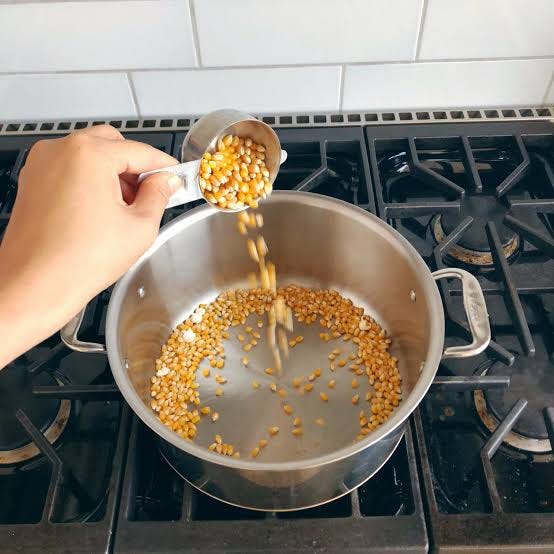
Popcorn is one of my favorite snacks. Admittedly I usually buy the premade bags, but occasionally I will pop some on the stove. To make popcorn on the stove (whether using Jiffy Pop or doing it the old-fashioned way), the principles are the same. You must keep the popcorn kernels on steady heat and move the pan around until the magic happens. If you are patient, those hard, inedible kernels transform into something different – a little soft, a little crunchy and delicious with a little butter and seasoning.
Now consider this – you turn on the heat, put the popcorn on the stove and remove it after 5 seconds. Then you wait 10 minutes and put it on for another 5 seconds. You do this again and again. What would happen? Nothing. No matter how many times you repeated that sequence the popcorn would never pop.
You’d be left with a pan full of cold, hard kernels.
So what does popcorn have to do with mindset in swimming?
When it comes to mindset in swimming, we often give it a few seconds of heat and then wonder why the popcorn never pops. This is the motivational speech before the big meet, a swimmer scrolling social media for inspiration between trials and finals or the course a swimmer watches at the beginning of the season then forgets. None of these things produces enough sustained “heat” to produce a real change in the swimmer and their performance. The kernels remain unpopped.
What’s interesting is that we don’t treat the rest of swimming this way. In fact, swimmers and coaches are generally obsessive about training and refining the physical side of swimming—from starts to underwaters to pacing to technique. We know that there are always improvements to be made and that transformation only comes through feedback and repeated practice. A swimmer doesn’t watch a video about starts once at the beginning of the season and expect their start to improve. They don’t hear a coach explain underwaters once and suddenly have great underwaters. They practice, get feedback, try something, make adjustments and practice again.
When it comes to mindset, however, things are different. I believe this is primarily because mindset, unlike starts and underwaters, is invisible. We focus on what we can see. We can see a swimmer’s stroke rate. We can see their splits, their turns and how many dolphin kicks they take off the wall. We can’t see what is happening in their head when they are standing behind the blocks or when a competitor starts to surge. Since we can’t see it, we tend to ignore it and hope that the swimmers figure it out on their own. This means mindset is often left to chance.
Without some sort of structured program, most swimmers focus on mindset only before the big meet. However, just like the popcorn kernels in the pan, a swimmer’s mindset isn’t changed by short bursts of “heat”. It’s changed by sustained, ongoing focus.
So what does this look like for a team?
Go back to the popcorn. It takes steady heat, a pan that keeps moving and the patience to wait for the magic to happen.
Sustained heat means consistency. Not one big speech before championships, but a few minutes, regularly, all season long.
Keeping the pan moving means using what you learn. A swimmer doesn’t learn a mindset strategy by hearing about it once. They learn it by trying it in practice, using it at a meet and building their own personal formula for what works.
Patience means sticking with it even when you can’t see anything happening. Mindset is invisible, so the change is too, right up until the moment it shows up in a race. This is exactly like a kernel of popcorn. It looks exactly the same — until all of a sudden it doesn’t.
The kernels are already in the pan. The only question is whether anyone leaves the heat on long enough for them to pop.
If you're a coach, how much attention is your team really giving to this part of training? That’s something I’d love to explore with you through the Championship Performance Audit. It’s a structured conversation about your typical swimmer—how they perform at championship meets, how they respond when things don’t go according to plan, and where you see opportunities for them to improve.
If you’re curious about what that conversation might reveal about your team, I’d love to talk.